Tech News, Tech Iinfo Blog, Info Tech Blog
Earning a PMP, AWS Solutions Architect, or CISSP are among the Top 10 High-Value Certifications for Career Advancement because they provide verified proof of technical expertise and management skills to employers. These credentials typically lead to higher salary brackets and faster promotion cycles compared to experience alone. However, the exact value of each certificate depends heavily on your specific industry and the current demand for that skill set. If you’re in a junior role, focus on foundational tech certs; if you’re in management, prioritize strategic ones.
Top 10 High-Value Certifications for Career Advancement
The right credential saves time and money by focusing your energy on high-demand sectors. Compare these standard options to see which matches your current career trajectory and industry requirements.
| Method | How long | Effort | Cost | Best for |
|---|---|---|---|---|
| Project Management | 3-6 months | High | Medium | Managers |
| Cloud Computing | 2-4 months | High | Medium | IT Architects |
| Cyber Security | 4-8 months | Very High | High | Security Pros |
| Data Analytics | 1-3 months | Medium | Low | Entry Level |
This table shows common pathways, but this varies by model. Always check the specific label on the official certification body website before you pay.
A mistake people often make is choosing a popular exam that doesn’t align with their actual job role. This error costs them months of study time and hundreds of dollars in wasted exam fees.
Use this decision rule to filter your choices: if you have a deep technical background, pursue the security route. If you’re strong with people and processes, choose the project management route.
The trade-off is simple. More specialized certifications take longer to study for but offer higher pay ceilings. Generalist certs are faster but may not help you stand out as much in competitive hiring pools.
You can tell which path you’re in by looking at your daily work. If you spend over 60% of your time managing stakeholders or budgets, prioritize management credentials. If you spend that time auditing code or server logs, prioritize technical security or cloud certifications. If you choose the wrong path, you’ll likely find the material disconnected from your daily performance reviews, leading to a certification that sits idle on your resume.
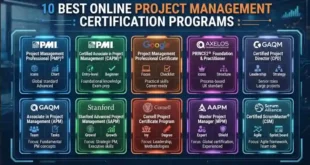
Professional Project Management Certification
Project management credentials like the PMP are widely recognized for verifying that you can lead teams and deliver complex projects on time. This isn’t for someone who has never handled a budget or a team, as the exam requires documented proof of your experience.
Review the eligibility requirements on the Project Management Institute certification handbook to ensure you have the required hours of leading projects. If you hold a four-year degree, you need 36 months of unique, non-overlapping professional project management experience. Without a degree, that requirement jumps to 60 months.
Complete 35 hours of project management education through an authorized training provider or university course. Many candidates make the mistake of choosing cheap, unaccredited bootcamps that don’t count toward the PMI requirement. Verify your provider is an Authorized Training Partner to avoid wasting your tuition.
Apply for the exam and pay the fee once your education hours are verified by the board. Study for 10 to 15 weeks using the official PMBOK Guide, focusing on agile and predictive methodologies.
Schedule your test at a verified center or take it online once you consistently score above 80% on practice exams. If you score below 70% on these simulations, delay your test date. Rushing the exam often results in a failure, which costs the full exam fee to retake.
This path is excellent for those looking to move into operations or senior leadership roles. It signals to recruiters that you follow global standards. You must maintain your credential by earning professional development units regularly to keep it active.
Cloud Architecture Certifications
Cloud certifications, such as those from AWS or Azure, prove you can build and maintain scalable infrastructure in the cloud. These are essential for anyone working in modern software development.
- Choose a specialization path, such as Solutions Architect or DevOps Engineer, based on your current company’s tech stack. If your firm uses AWS, prioritize the Solutions Architect Associate track. If you’re in a multi-cloud environment, focus on vendor-neutral networking fundamentals first.
- Dedicate 2 to 4 months of study to mastering cloud storage, compute, and networking principles. Most candidates fail by neglecting cost-optimization services, which often account for 15% of the exam weight.
- Use official vendor labs to build hands-on projects, as theoretical knowledge alone is rarely enough to pass the practical sections. If you can’t explain why a specific instance type was chosen over another, you aren’t ready for the exam.
- Take practice tests provided by the vendor to identify your weak points in cost management and security. If you score below 70% on these, delay your booking. Rushing leads to a loss of the $150 exam fee and a mandatory waiting period.
- Book the exam through the vendor portal and aim to complete it within 3 months of starting your prep.
These certifications are highly portable; the skills you learn are used by companies worldwide. A real limit is that these platforms update their services constantly, so your knowledge can become outdated if you don’t update your skills annually. This isn’t for someone who prefers static, unchanging work environments. If you’re a beginner, start with the practitioner level to learn the basic terminology.
Cybersecurity and Risk Management
Cybersecurity certifications like the CISSP are the gold standard for professionals tasked with protecting corporate data and systems. These exams are rigorous and test your ability to think like a security manager rather than just a technician.
- Verify that you have at least 5 years of full-time work experience in at least two of the eight domains covered by the exam.
- Enroll in a preparatory course that covers risk, governance, and physical security.
- Spend 4 to 6 months reading official security textbooks and reviewing case studies on common breaches.
- Practice answering scenario-based questions where you must choose the most secure business decision rather than the fastest technical one.
- Register for the exam once you feel comfortable with the complex, multi-layered security frameworks.
Most candidates fail because they treat the test as a technical quiz. In reality, the exam forces you to prioritize business continuity over perfect security. If a question asks for the “best” solution, the answer is often the one that minimizes cost or disruption, not the one that implements the most advanced encryption.
If you’re a technical specialist, you must shift your mindset to view security as a risk management function. A common mistake is ignoring the “governance” domain, which accounts for a significant portion of the final score. If you struggle with abstract policy, focus your study time here.
This certification is highly valued because it’s difficult to obtain, which keeps the supply of certified professionals low and salaries high. If you don’t have the required years of experience, you can become an associate and gain the full certification after meeting the time requirement.
Which one should you use?
Choosing the right path depends on your immediate career goal. If you’re in a hurry, choose a Data Analytics certification; these have a shorter syllabus and allow you to start applying for jobs within a few weeks.
If you’re doing this for the first time, start with a Cloud Practitioner or entry-level Project Management course; these provide a broad overview that helps you decide if you want to specialize further.
If you want the best possible result whatever it takes, go for the CISSP or a high-level Project Management certification; these are widely considered the “heavyweight” options that command the most respect from hiring managers.
The trade-off remains the same across all three: you must choose between speed and depth. A quick certification helps you get your foot in the door, while a deep, rigorous certification helps you climb to the top of the ladder.
Don’t make the mistake of over-certifying without gaining actual work experience, as most employers value a mix of both. If you have the time, gain experience first and use the certification to validate what you already know.
The primary decision rule is simple: if you lack industry experience, prioritize a credential that offers hands-on labs. If you already have two years of experience, skip the entry-level badges and pursue a professional-grade certification.
Many candidates fail by collecting entry-level certificates like trading cards. This costs them credibility, as hiring managers view “paper tigers” as individuals who lack the practical grit required for complex, high-stakes environments. Always aim for the certification that bridges your current skill gap rather than the one that’s easiest to pass.
The rules that apply whichever way you choose
Regardless of the method, you must follow the standards set by the governing body for your specific industry. Always check the official website of the organization issuing the credential to ensure you meet the prerequisite criteria before spending money on study materials. Most reputable certifications require a background check or a verified record of your professional history.
Prepare by gathering all your employment documentation and academic transcripts early in the process. Partway through your study, perform a self-assessment by taking a full-length, timed practice exam. This will tell you if you’re ready for the real test or if you need to adjust your study plan. At the end of the process, keep your certification active by logging your continuing education hours.
Some certifications require professional association membership to maintain your status. If you handle sensitive data, verify legal clearance requirements with your employer or government agencies. Always store copies of your digital badges and certificates in a secure location. Moving forward, research specific renewal policies for your chosen credential to ensure long-term compliance.