Tech News, Tech Iinfo Blog, Info Tech Blog
Patients seeking fertility treatments through a Singapore ivf specialist hospital guide will find that success rates depend heavily on maternal age and clinic protocols. According to the Ministry of Health, clinics in Singapore report cumulative live birth rates per embryo transfer that generally range from 20% to 40% for women under 35. This guide covers the essential steps for selecting a provider, understanding the legal framework, and managing expectations during your treatment journey.
Selecting a Singapore fertility specialist hospital
A fertility center is a medical facility staffed by specialized reproductive endocrinologists and embryologists dedicated to assisting individuals with conception. These centers provide services like in vitro fertilization (IVF), intrauterine insemination (IUI), and egg freezing. They’re designed for couples or individuals experiencing clinical infertility or those requiring medical intervention to conceive.
Many patients assume that all clinics offer identical success rates, but results vary based on the laboratory’s technology and the specific expertise of the medical team. A core rule in reproductive medicine is that if the patient is under 35, doctors often recommend a single embryo transfer to minimize multiple pregnancy risks; if the patient is 40 or older, they may discuss transferring multiple embryos to increase the odds of a successful pregnancy.
Navigating the Treatment Process
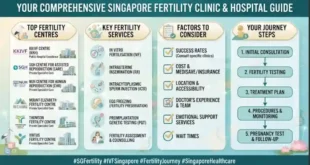
- Initial Consultation: Schedule a meeting with a fertility specialist to review your medical history and conduct baseline tests.
- Fertility Assessment: Both partners undergo blood tests and ultrasounds to evaluate ovarian reserve and sperm health.
- Ovarian Stimulation: You’ll take hormone medications for 8 to 12 days to encourage the growth of multiple follicles.
- Monitoring: Attend clinic visits every 2 to 3 days for blood work and ultrasounds to track follicle development.
- Egg Retrieval: A surgeon performs a minor procedure under sedation to collect mature eggs from the ovaries.
- Fertilization: Embryologists combine the eggs and sperm in a laboratory setting to create embryos.
- Embryo Transfer: A doctor places one or more embryos into the uterus, usually 3 to 5 days after retrieval.
The critical decision point is choosing between a fresh or frozen embryo transfer. A fresh transfer happens immediately after retrieval, while a frozen transfer allows the body to recover from stimulation. Many specialists now prefer frozen transfers to improve implantation rates. If you require specialized genetic screening, ensure the center has an on-site laboratory or a verified partner facility to handle the complex biopsy process.
Key Statistics and Clinic Settings
Selecting the right environment for your treatment requires comparing key metrics. The following table provides typical parameters you might encounter when reviewing clinic options.
| Situation | Recommended Strategy | Typical Duration | What to Watch For |
|---|---|---|---|
| Under 35 years | Single embryo transfer | 4–6 weeks | Ovarian hyperstimulation |
| Over 40 years | Comprehensive genetic testing | 6–8 weeks | Egg quality decline |
| Male factor issues | Intracytoplasmic sperm injection | 4–6 weeks | Sperm morphology results |
| Previous failures | Protocol adjustment | 8–12 weeks | Laboratory quality control |
| Egg freezing | Vitrification storage | 2–4 weeks | Yearly storage fees |
When evaluating these settings, prioritize clinics that publish their live birth rates alongside their cycle volume. High volume often indicates a laboratory team with consistent experience in handling delicate samples.
Look specifically for the presence of an on-site embryology lab. Clinics that outsource their fertilization processes to third-party facilities introduce unnecessary transit risks for your embryos.
Finally, ask about their specific approach to patient communication during the stimulation phase. A clinic that provides direct access to your primary specialist—rather than relying solely on nursing staff—tends to manage sudden protocol shifts more effectively when your body responds differently than expected.
Achieving Optimal Clinical Outcomes
Experienced patients know that preparation begins months before the first cycle. They focus on lifestyle factors like nutrition and minimizing stress to optimize egg and sperm health. A common mistake people make is waiting until the last minute to review insurance coverage, which can cost them thousands of dollars in unexpected out-of-pocket expenses.
When you start your cycle, follow the clinic’s medication schedule precisely. Missing a single injection can disrupt the entire timing of your ovulation, potentially causing the cycle to be canceled. If you’re uncertain about the dosage, call your nurse coordinator immediately rather than guessing. Successful patients keep a detailed log of every dose, appointment, and symptom to share with their specialist during check-ups.
This diligence matters because IVF success relies on precise hormonal synchronization. Even minor deviations in medication timing can lead to premature follicle maturation or poor egg retrieval yields. By maintaining this log, you provide your fertility specialist with a precise clinical history, allowing them to adjust your stimulation protocol in real-time if your body responds unexpectedly.
Addressing Common Clinical Problems
| What you notice | What it usually means | What to do first |
|---|---|---|
| Excessive bloating | Ovarian stimulation response | Contact your clinic nurse |
| Missed injection dose | Medication timing error | Call the clinic immediately |
| Spotting after transfer | Implantation or hormone shift | Rest and notify your doctor |
| High anxiety levels | Emotional stress of cycle | Consult a fertility counselor |
When you experience severe bloating, it often indicates that your ovaries are reacting strongly to stimulation medication. While some discomfort is expected, rapid weight gain or sharp abdominal pain requires urgent clinical assessment to rule out ovarian hyperstimulation syndrome.
If you miss an injection, don’t attempt to double your next dose. Timing is critical for follicle maturation, and your specialist may need to adjust your protocol to keep the cycle on track.
Spotting during the two-week wait can be distressing, but it’s frequently linked to hormonal fluctuations or the embryo attaching to the uterine lining. Avoid heavy lifting and strenuous exercise until you receive professional guidance.
Finally, high anxiety is a natural response to the intensity of IVF. Speaking with a counselor familiar with fertility challenges provides a necessary outlet. Managing your mental health is as vital to your cycle as the physical treatment itself.
Regulatory Standards and Legal Requirements
The Ministry of Health provides strict guidelines for all assisted reproduction procedures. These rules ensure that medical practices remain ethical and safe for all patients. For instance, the Ministry of Health Singapore regulates the storage limits for frozen embryos and the eligibility criteria for patients seeking treatment.
Before starting, confirm that your chosen hospital holds a current license for assisted reproduction services. You should also verify if the clinic is accredited for the specific genetic or diagnostic tests you require. If your case involves complex medical history, such as a history of recurrent miscarriage, ask the clinic to provide a written care plan. Always check the official government portal to confirm that your clinic is currently authorized to perform the procedures you’re considering.
Managing Your Fertility Results
Once your treatment concludes, the focus shifts to maintenance and long-term planning. If you have remaining embryos, you must decide on a storage plan with the hospital. Most centers charge an annual fee for cryopreservation, which covers the cost of liquid nitrogen storage and constant monitoring.
These storage agreements often require annual renewal signatures. If you fail to renew, the hospital may eventually consider the embryos abandoned under local clinical guidelines. Always confirm the specific expiration protocols for your chosen facility to avoid accidental loss.
Keep all your medical records in a secure, digital format. If you decide to change clinics or pursue further cycles, having a complete history of your previous stimulation protocols and fertilization results is vital.
If you experience signs of infection or severe abdominal pain after a procedure, seek medical attention at the hospital’s emergency department immediately. Don’t wait for your scheduled follow-up appointment if you feel something is physically wrong. Post-operative complications can escalate quickly, and your primary fertility specialist may not be available for urgent, after-hours physical assessments.
When to Seek Alternative Options
Some patients find that standard IVF protocols don’t work for their specific medical situation. If you have undergone multiple failed cycles, you might consider shifting to a clinic that specializes in advanced immunology or complex male factor infertility. These specialized centers may offer tailored protocols that standard hospitals don’t provide.
Look for clinics that provide specific diagnostic testing for recurrent implantation failure. If your current team doesn’t offer specialized uterine receptivity arrays or advanced sperm DNA fragmentation testing, seeking a second opinion at a boutique clinic can reveal underlying barriers. These centers often focus on individual biological nuances rather than generalized treatment paths.
Another alternative is using donor eggs or sperm if your own biological markers suggest a low probability of success. This is a significant emotional and financial decision that requires thorough consultation with a fertility counselor. Finally, if the cost of treatment in a private hospital exceeds your budget, check if you qualify for government-subsidized programs at public institutions, which often provide similar medical care at a lower price point.
Frequently asked questions
How long does an IVF cycle take?
A single cycle typically takes 4 to 6 weeks from the start of medication to the pregnancy test. This includes the stimulation phase, egg retrieval, and the wait time until the embryo transfer. If you opt for genetic testing, you may need to add 2 to 4 weeks for laboratory results.
Is IVF treatment safe for the mother?
Yes, it’s generally considered safe, though it carries risks like ovarian hyperstimulation syndrome. The Ministry of Health mandates that clinics monitor hormone levels closely to prevent this condition. You should discuss your specific medical history with your doctor to understand your personal risk factors before starting.
How much does IVF cost in Singapore?
Prices are generally inexpensive relative to the alternative, depending on the clinic and medication requirements. This range assumes a standard protocol without complex genetic testing. You should check the official fee schedule provided by your specific hospital, as costs vary based on the clinic’s tier and your insurance coverage.
Can I choose the gender of my baby?
No, gender selection for non-medical reasons isn’t permitted in Singapore. Clinical procedures are strictly limited to medical necessities, such as preventing the transmission of sex-linked genetic disorders. You must consult with your doctor to see if you meet the specific medical criteria required for such testing.
What happens if the first cycle fails?
It’s common to require more than one cycle to achieve a successful pregnancy. Your doctor will review the results of your first cycle to adjust your medication dosage or laboratory technique for the next attempt. Many couples find success by refining their approach based on the data gathered during their initial treatment.
How many embryos are usually transferred?
Most clinics aim to transfer one or two embryos to balance the chance of pregnancy with the risks of multiple births. Your doctor will base this decision on your age, the quality of the embryos, and your previous treatment history. Always follow the specific recommendation provided by your clinical team.
Conclusion
Choosing the right fertility clinic is a deeply personal decision, so don’t hesitate to schedule consultations with a few different specialists. You’ll feel much more confident once you’ve met the medical team in person. Trust your instincts, take it one day at a time, and you’ll find the support you need.