Tech News, Tech Iinfo Blog, Info Tech Blog
Singapore hospital insurance exclusions are explained by the fact that most private plans do not cover pre-existing conditions, elective cosmetic procedures, or experimental treatments. These standard industry limits help keep premiums affordable. You should check your policy to understand how these exclusions apply so you can avoid surprise medical costs.
Common Hospital Insurance Exclusions
Private health insurance in Singapore is designed to cover unexpected medical costs, not routine or planned health expenses. When you buy a policy, insurers use a list of standard exclusions to define the scope of their financial risk. If a treatment falls into an excluded category, you’re responsible for the total cost, regardless of your plan’s annual limit.
A common mistake people make is assuming that “full coverage” includes everything a doctor recommends. In reality, full coverage typically refers to the total bill for covered treatments, not an all-inclusive guarantee for every medical procedure. If you have a known condition before you buy a policy, that specific condition is almost always excluded from your coverage for a set period or permanently. Always check your “Policy Schedule” or “Summary of Coverage” document, as the specific list of exclusions varies by insurer and plan tier.
Reviewing Your Policy Exclusions
Follow these steps to identify what your specific policy doesn’t cover.
- Open your policy contract and locate the section titled “General Exclusions” or “Specific Exclusions.”
- Check for “Pre-existing Conditions” clauses; these usually state that any illness diagnosed before the policy start date isn’t covered.
- Look for “Cosmetic or Elective Procedures,” which include surgeries to improve appearance, such as rhinoplasty or non-medical skin treatments.
- Identify “Experimental Treatments” or procedures not yet recognized as medically necessary.
- Check for “Outpatient Treatment” exclusions, especially if your plan only covers inpatient hospital stays.
- Cross-reference these lists with the MOH List of Surgery to see which procedures are standard for claims.
The critical judgement call is determining if a procedure is “medically necessary.” If a doctor recommends a surgery for aesthetic reasons rather than to treat a functional impairment, your claim will likely be rejected.
Standard Coverage Variations
| Situation | Typical Coverage | Duration/Limit | What to Watch For |
|---|---|---|---|
| Pre-existing conditions | Usually excluded | Varies by plan | Check for “moratorium” clauses |
| Cosmetic surgery | Not covered | Permanent | Check “Elective” definitions |
| Dental treatment | Limited | Specific benefit caps | Often requires a rider |
| Experimental drugs | Not covered | Permanent | Check MOH approved list |
| Pregnancy care | Optional | Requires specific rider | Waiting periods apply |
Most buyers mistake a “pre-existing” exclusion for a permanent ban. If you have been symptom-free for 24 months, many insurers will waive the moratorium. Always ask for a “medical underwriting” review to secure coverage for these conditions.
For dental care, don’t assume basic plans include restorative work. If your policy lacks a rider, you’ll pay 100% of costs out-of-pocket. Check the benefit cap; most plans limit annual payouts to $1,500.
Regarding pregnancy, the decision rule is simple. If you’re already pregnant, no rider will cover the birth. You must purchase the rider at least 10 months before conception to qualify for benefits.
Finally, distinguish between “elective” and “reconstructive” surgery. If a procedure is deemed elective, you lose all coverage, even if the surgery improves your physical function. Verify the surgeon’s billing code against your policy’s specific exclusion list before scheduling any operation.
Best Practices for Policy Management
Experienced policyholders prepare by maintaining a clear record of their health history and reading the fine print before signing. They know that insurers often use a “waiting period” for certain conditions, typically ranging from 30 days to 12 months. During this time, you should avoid elective procedures that might be flagged as pre-existing if you develop complications later.
Documentation and Preparation
Keep a copy of your initial medical screening reports. If you have a minor condition, some insurers offer a “loading” or a premium increase to cover it, rather than a full exclusion. Always confirm this in writing with your agent.
Regular Policy Reviews
Check your coverage annually. If your health status changes, notify your insurer immediately. Failing to disclose a new condition can lead to a total denial of future claims, even for unrelated issues, as it may void your contract terms.
Resolving Common Coverage Issues
| What you notice | What it usually means | What to do first |
|---|---|---|
| Claim denied for “Pre-existing” | Condition existed before cover | Request a written medical review |
| “Medically unnecessary” rejection | Procedure is elective | Get a doctor’s letter of necessity |
| “Benefit limit exceeded” | Costs higher than plan cap | Check your specific plan tier |
| “Non-approved facility” | Hospital is out of network | Contact insurer for pre-approval |
Most denials stem from simple coding errors. If your claim is rejected for being “medically unnecessary,” ensure your physician used the specific ICD-10 code matching your diagnosis. A generic code often triggers an automatic rejection.
If your plan limit is exceeded, verify if your policy includes a “stop-loss” provision. This clause often kicks in once your out-of-pocket expenses reach a certain threshold, potentially covering the remaining balance.
When facing an out-of-network denial, check if you were in an emergency room. Federal law often mandates that insurers cover emergency services at in-network rates, regardless of the facility’s status. If you were stable, you must prove there was no local in-network provider available to perform the procedure. Failing to document this availability early can cost you thousands in balance billing.
Legal and Regulatory Standards
The Monetary Authority of Singapore (MAS) regulates the conduct of insurance companies, ensuring they communicate exclusions clearly. However, the medical necessity of a procedure is often governed by the clinical guidelines set by the Ministry of Health. If you feel a claim was wrongly denied based on these definitions, you can appeal through the Financial Industry Disputes Resolution Centre (FIDReC).
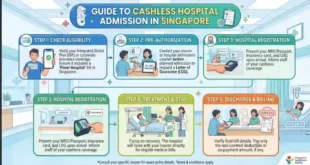
Remember that insurance is a contract of “utmost good faith.” If you intentionally hide a past diagnosis, the insurer has the legal right to cancel your policy or refuse all future claims. If you require specialized care, always request a “Letter of Guarantee” from your insurer before checking into a hospital to ensure the procedure is covered.
Maintaining Your Insurance Status
To keep your coverage active, pay your premiums on time and update your contact information. If you miss a payment, your policy may lapse. Any new conditions developed during that gap will be treated as pre-existing when you reapply, meaning the insurer can permanently exclude them from future claims.
If you plan to live or travel abroad, check if your policy has a “territorial limit.” Most Singapore-based plans provide limited or no coverage for hospital stays outside of Singapore unless you have an international rider.
When your policy reaches its anniversary, read the renewal notice carefully for any changes in exclusion lists. Insurers update these terms annually based on medical technology and healthcare costs. If you see a new exclusion, don’t simply renew. Compare the new terms against your current health status. If you have recently developed a condition that’s now excluded, you must switch insurers immediately before the renewal date to maintain coverage for that specific ailment.
When to Seek Alternative Coverage
This approach works for most people, but it isn’t for everyone. If you have a significant chronic condition that requires constant care, a standard private hospital plan may be too expensive or heavily restricted by exclusions.
In this case, look into government-subsidized schemes like MediShield Life. It’s designed to provide basic protection for all Singapore citizens regardless of health status.
If you’re a high-net-worth individual, consider an international health plan. These often offer broader coverage for experimental treatments and fewer geographic restrictions. However, they frequently cost three times more than local private plans.
The primary mistake is failing to check the “pre-existing condition” clause in your policy. If your condition is excluded, you’re paying premiums for coverage that will never trigger. If your annual medical expenses consistently exceed 10% of your gross income, switch to a government-subsidized scheme immediately. The cost of remaining in a private plan will only compound as your health needs evolve.
Frequently asked questions
Can I get coverage for a pre-existing condition?
No, most standard hospital insurance plans in Singapore exclude pre-existing conditions. Some insurers may offer to include them after a period of “continuous coverage” without symptoms, or they may apply a “loading” fee to your premium to cover the specific condition. Always check your individual policy terms for these options.
How long is the waiting period for new illnesses?
The waiting period is typically 30 days for new illnesses after the policy start date. This rule prevents people from buying insurance only after they suspect they have a health issue. For specific conditions like cancer or specialized surgeries, the waiting period can be as long as 12 months.
Is it safe to undergo experimental treatment?
It’s often not safe from a financial perspective, as most insurers explicitly exclude experimental treatments. You must verify if your specific procedure is recognized as “standard care” before proceeding, or you’ll likely be responsible for the full cost of the treatment.
What happens if I hide a past condition?
If you hide a past condition, your insurer can legally void your policy or deny all future claims. This is known as “non-disclosure,” and it’s one of the most common reasons for claim rejections. Always provide a full and honest medical history when you apply for your insurance.
How do I know if my surgery is covered?
You know your surgery is covered by requesting a “Pre-authorization” or “Letter of Guarantee” from your insurer. This process involves submitting your doctor’s diagnosis and the proposed treatment plan to the insurer, who will then confirm in writing whether the surgery meets the requirements of your specific policy.
Why was my claim rejected for cosmetic reasons?
Your claim was rejected because cosmetic procedures don’t meet the definition of “medically necessary” care. Insurance is intended to restore health, not to improve appearance. Unless you can provide medical evidence that the surgery corrects a functional impairment, the insurer won’t pay for the costs involved.
Conclusion
Your insurance policy is a legal agreement that protects your finances, provided you stay within the defined terms. By auditing your exclusions and keeping your medical records current, you ensure that your coverage remains a reliable safety net when you need it most.