Tech News, Tech Iinfo Blog, Info Tech Blog
Singapore’s maternity costs range from about S$2,500 to S$30,000+ depending on whether you deliver in a public or private hospital, your ward class, and whether you choose a doctor or midwife-led care. This Singapore hospital maternity cost guide breaks down real numbers for 2025, so you can plan before the first trimester ends.
Key Takeaways
- Public hospital subsidized care is the cheapest route: roughly S$2,500–S$6,000 for a normal delivery with a C-class ward and no chosen doctor.
- Private hospital packages typically run S$12,000–S$30,000+, with cesarean sections and single rooms pushing toward the top of that range.
- MediSave can cover up to S$4,100–S$6,100 of delivery and pre-delivery bills, depending on the procedure and whether it’s your first or subsequent birth.
- MediShield Life and Integrated Shield Plans cover large hospital bills but generally exclude routine antenatal checkups.
- Booking early matters: popular obstetricians and private hospitals fill their delivery calendars months ahead, and package prices rarely drop.
- Citizenship and residency status heavily affect your subsidy tier at public hospitals, so confirm your eligibility before budgeting.
Public vs Private Hospitals: The Big Split
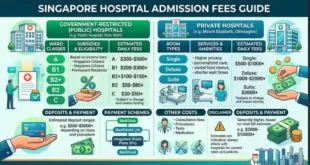
The single biggest cost decision is public versus private. Public hospitals (KK Women’s and Children’s Hospital, National University Hospital, Singapore General Hospital, and others) offer subsidized care where you don’t pick your doctor. Private hospitals (Mount Elizabeth, Gleneagles, Thomson Medical, Raffles) offer a named specialist, more private rooms, and shorter waits, at a much higher price.
At public hospitals, your ward class drives the bill. A C-class ward is heavily subsidized; an A-class ward in the same hospital isn’t subsidized at all and can cost nearly as much as a private hospital. This is the trap many first-time parents fall into — assuming “public” always means “cheap.”
What “Subsidized” Actually Means
Subsidized patients at public hospitals receive a government subsidy on their ward and delivery charges, but they can’t choose their obstetrician and are seen by the duty team. If you want a specific doctor at a public hospital, you become a private patient within that hospital, and your subsidy disappears.
Singapore Hospital Maternity Cost Ranges
The table below shows typical total ranges for a normal vaginal delivery and a cesarean section, including the delivery itself and a typical stay. These are broad ranges, not quotes, and exclude antenatal packages and postnatal care.
| Hospital type / ward class | Normal delivery | Cesarean section |
|---|---|---|
| Public, subsidized (C/B2 class) | S$2,500–S$6,000 | S$4,000–S$9,000 |
| Public, private patient (A/B1 class) | S$8,000–S$14,000 | S$12,000–S$20,000 |
| Private hospital (single room) | S$12,000–S$20,000 | S$18,000–S$30,000+ |
These ranges assume an uncomplicated birth. Complications, premature delivery, NICU time, or an extended stay can multiply the bill several times over.
The Costs Nobody Warns You About
Delivery is only part of the bill. Antenatal care — the monthly checkups, scans, and blood tests across nine months — is a separate line item that many parents forget to budget. A typical private antenatal package runs S$2,000–S$4,000; public hospital checkups billed individually can total S$800–S$2,000.
Then there’s the postnatal period: pediatrician visits for the baby, vaccination schedules, and if you choose it, confinement care. A confinement nanny in Singapore commonly costs S$3,000–S$4,500 for a 28-day stay, and confinement food delivery adds more.
- Antenatal scans: the detailed anomaly scan and growth scans are often billed separately from the package.
- Genetic screening: non-invasive prenatal testing (NIPT) typically runs S$800–S$1,500.
- Epidural: often S$800–S$1,500 extra, and it isn’t always in the package.
- Pediatrician fees: the doctor who examines your newborn bills separately from your obstetrician.
- NICU: if your baby needs intensive care, daily costs can reach four figures.
Pro Tip: Ask every provider for a written “global fee” versus “itemized” quote. A global fee bundles delivery and routine care into one price; itemized billing can balloon with each intervention, so compare like for like.
How MediSave and Insurance Help
Singapore’s MediSave scheme lets you use your CPF savings to pay for delivery and certain pre-delivery expenses, within withdrawal limits. For a normal vaginal delivery, the current limit is around S$4,100 for the first birth and higher for subsequent births; cesarean limits are higher still, roughly S$6,100. These limits apply to the combined delivery and hospital charges, not to routine antenatal visits.
MediShield Life is Singapore’s universal basic health insurance and covers large hospital bills, including delivery-related hospitalization, but it doesn’t cover routine antenatal checkups or the delivery itself in the way many parents expect. Integrated Shield Plans, offered by private insurers and built on top of MediShield Life, can cover higher ward classes and private hospitals, but maternity benefits vary widely and often have waiting periods.
The Ministry of Health publishes the official withdrawal limits and claim rules, and you can verify the current figures directly at the CPF MediSave maternity page. Always confirm the latest numbers, because limits are adjusted periodically.
The Waiting-Period Trap
If you’re planning a pregnancy, check your insurance policy’s maternity waiting period now. Most Integrated Shield Plans impose a waiting period of 10 to 24 months before maternity complications are covered. Buying a plan after you’re already pregnant is usually too late.
A Realistic Budget Breakdown
Here is how a mid-range private hospital birth might break down, so you can see where the money actually goes.
| Cost category | Typical range |
|---|---|
| Antenatal package (private) | S$2,000–S$4,000 |
| Delivery + hospital stay (private, single room) | S$12,000–S$20,000 |
| Epidural and extras | S$800–S$2,000 |
| Newborn pediatrician fees | S$500–S$1,500 |
| Postnatal checkups and vaccinations | S$500–S$1,200 |
| Confinement nanny (optional) | S$3,000–S$4,500 |
Add those up and a private birth with confinement care can easily reach S$20,000–S$30,000. A subsidized public birth with no confinement nanny can stay under S$6,000.
Public Hospital Class-by-Class Comparison
Because ward class is the biggest lever at public hospitals, it deserves its own table.
| Ward class | Subsidy level | Typical delivery bill | Doctor choice |
|---|---|---|---|
| C | Highest | S$2,500–S$4,500 | No |
| B2 | High | S$3,500–S$6,000 | No |
| B1 | Low | S$6,000–S$10,000 | Limited |
| A | None | S$8,000–S$14,000 | Yes |
Moving from C to A class in the same hospital can triple your bill for the same medical care, purely for privacy and comfort. That’s a lifestyle choice, not a medical one — decide it deliberately.
What Changes the Final Bill
Several factors swing your total far more than the headline package price.
- Mode of delivery: an emergency cesarean after a long labor costs more than a planned one.
- Length of stay: each extra day adds room, nursing, and doctor fees.
- Complications: gestational diabetes, pre-eclampsia, or a premature baby all add cost.
- Time of delivery: some doctors charge a premium for deliveries in the middle of the night or on public holidays.
- Multiple babies: twins mean two sets of pediatric fees and often a higher-risk delivery.
Warning: Never choose a hospital purely on the advertised package price. Ask what is excluded — epidural, assisted delivery, NICU, and pediatrician fees are the usual omissions.
Ways to Reduce Your Maternity Bill
You have more control over cost than it first appears. The biggest savings come from choices made early.
- Choose a subsidized public ward if privacy isn’t your priority — this alone can save S$10,000 or more.
- Use a public hospital antenatal clinic instead of a private obstetrician’s package.
- Decline non-essential add-ons like routine cord blood banking unless you have a specific reason.
- Compare Integrated Shield Plans during the planning phase, before any waiting period starts.
- Pay with MediSave first, then insurance, then cash, to maximize interest-free CPF usage.
- Ask about installment plans — many private clinics split antenatal packages into monthly payments.
Should You Get a Confinement Nanny?
This is optional and lifestyle-driven. A nanny costs S$3,000–S$4,500 but can reduce postnatal stress and hospital readmissions. If budget is tight, family help or a part-time confinement food service is a cheaper middle ground.
Frequently Asked Questions
How much does it cost to give birth in Singapore?
It depends entirely on hospital type and ward class. Subsidized public care runs roughly S$2,500–S$6,000, public private-patient care S$8,000–S$14,000, and private hospitals S$12,000–S$30,000+. Add antenatal packages and postnatal care on top of these delivery figures.
Can I use MediSave for maternity costs?
Yes, MediSave can be used for delivery and certain pre-delivery expenses within withdrawal limits — around S$4,100 for a first normal delivery and roughly S$6,100 for a cesarean. It doesn’t cover routine antenatal checkups. Confirm current limits with CPF before you budget.
Is it cheaper to deliver in a public or private hospital?
Public hospitals are almost always cheaper, especially in subsidized C and B2 wards. A subsidized public birth can cost a fraction of a private hospital birth for the same uncomplicated delivery. The trade-off is less privacy, no chosen doctor, and potentially longer waits.
Does insurance cover maternity in Singapore?
MediShield Life covers large hospital bills but not routine antenatal care. Integrated Shield Plans may cover more, but maternity benefits vary and usually carry a 10–24 month waiting period. Buy and confirm coverage before you conceive, not after.
What isn’t included in a maternity package?
Typical exclusions include epidural, assisted or emergency cesarean delivery, NICU care, newborn pediatrician fees, genetic screening, and some scans. Always request a written list of inclusions and exclusions before committing to a package.
How early should I book a hospital or doctor?
Book as soon as you confirm your pregnancy, ideally within the first trimester. Popular private obstetricians and private hospital delivery suites fill months ahead, and prices don’t drop closer to the due date, so early booking gives you choice rather than savings.
Conclusion
Start by deciding your ward class and hospital type first, since that single choice determines 70% of your bill. Then verify your MediSave and insurance coverage, request written quotes, and build a buffer of at least S$3,000 for complications before you sign any antenatal package.