Tech News, Tech Iinfo Blog, Info Tech Blog
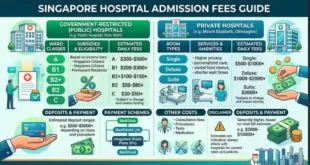
If you need surgery or even just a specialist consult in Singapore, the bill can swing from a few hundred dollars to well over S$100,000 depending on whether you go public or private and whether you’re a resident or a foreigner. For a total knee replacement, the typical all-in range is about S$8,000–S$12,000 in a public hospital as a subsidized patient, S$25,000–S$45,000 as a private patient in a restructured hospital, and S$40,000–S$70,000 in a fully private hospital. This Singapore hospital orthopedic treatment cost guide breaks down what you actually pay, procedure by procedure.
Key Takeaways
- Subsidy status drives the price more than the procedure does. The same knee replacement can cost three to five times more in a private hospital than in a subsidized public ward.
- Foreigners get no government subsidy and pay the full private rate at every hospital, public or private.
- MediSave can be used for hospitalization and selected day surgeries, but it can’t cover your outpatient specialist consultation.
- Integrated Shield Plans and riders cover most of the private-hospital gap, but only if the rider is current and the treatment isn’t excluded.
- Ask for a fee estimate in writing before you commit — every hospital in Singapore issues one on request.
- Emergency vs. elective matters. A fracture fixed in A&E follows a different billing path than a planned joint replacement.
What Drives the Final Bill
Two patients can have the same surgery and pay wildly different amounts. The gap comes from a handful of variables, not from the surgeon’s skill.
Hospital class is the biggest lever. A public hospital in a subsidized C or B2 ward costs a fraction of an A-class or private room in the same building, and the difference isn’t just the room — it changes which doctor you see and how much of the bill the government absorbs.
Residency status decides whether you get any subsidy at all. Citizens and permanent residents receive tiered subsidies; foreigners pay unsubsidized rates everywhere.
Implant choice swings the bill by thousands. A standard cobalt-chromium knee implant and a premium titanium or ceramic-coated one can differ by S$3,000–S$8,000 on their own.
Length of stay and complications add unpredictably. An extra week in a private room, a revision, or a post-operative infection can each add five figures.
Surgeon seniority matters less than people assume in public hospitals, where the fee schedule is standardized. In private practice, a senior consultant’s fee can be double a junior one’s.
Public vs. Private Hospital Costs
The table below shows typical all-in ranges for common orthopedic procedures, including surgeon fees, anesthesia, ward charges, and implants. Treat these as planning ranges, not quotes.
| Procedure | Public (subsidized) | Public (private class) | Private hospital |
|---|---|---|---|
| Total knee replacement | S$8,000–S$12,000 | S$25,000–S$45,000 | S$40,000–S$70,000 |
| Total hip replacement | S$9,000–S$14,000 | S$28,000–S$48,000 | S$45,000–S$75,000 |
| ACL reconstruction | S$4,000–S$7,000 | S$15,000–S$25,000 | S$20,000–S$35,000 |
| Shoulder rotator cuff repair | S$4,500–S$8,000 | S$16,000–S$28,000 | S$22,000–S$38,000 |
| Spinal fusion (single level) | S$10,000–S$18,000 | S$35,000–S$60,000 | S$50,000–S$90,000 |
| Carpal tunnel release | S$1,500–S$3,000 | S$5,000–S$9,000 | S$7,000–S$12,000 |
These figures cover the acute episode only. They exclude pre-surgery imaging done weeks earlier and all physiotherapy after discharge.
Pro Tip: If you’re a citizen or PR and can accept a B2 or C ward, your out-of-pocket cost for a major joint replacement can drop below S$2,000 after subsidy and MediSave — often less than a single night in a private room.
Consultation and Imaging Costs
The bill starts long before the operating theatre. Expect these outpatient charges:
- First specialist consult: S$120–S$200 (public, subsidized), S$180–S$300 (public, private class), S$200–S$400 (private)
- Follow-up consult: S$60–S$120 (public), S$120–S$250 (private)
- X-ray: S$40–S$90
- MRI (single region): S$600–S$1,200 public, S$1,000–S$2,500 private
- CT scan: S$500–S$1,000 public, S$900–S$2,000 private
Imaging is where private and public diverge sharply. An MRI at a restructured hospital can cost half what a private imaging center charges for the same scan, and the images are equally usable by any surgeon.
You can often shop for imaging separately from your surgeon. A referral from a polyclinic to a public hospital radiology department is the cheapest legitimate route.
What MediSave Actually Covers
MediSave is your own forced-savings account, not insurance. It has hard withdrawal limits per procedure, and those limits are set by the Ministry of Health, not the hospital.
- Hospitalization: S$450–S$700 per day for ward charges, depending on ward class.
- Surgical limits: set per procedure — a knee replacement has a higher withdrawal limit than a knee arthroscopy.
- Daily limits apply to the whole stay, so a long admission can exceed what MediSave will release.
- Outpatient specialist consults aren’t claimable under standard MediSave rules, though selected day surgeries are.
The practical consequence: MediSave covers a meaningful slice of a subsidized public bill and a small slice of a private one.
Warning: MediSave can’t be used to pay for a procedure that’s classified as cosmetic or non-medically necessary, even if a surgeon recommends it.
Insurance and Integrated Shield Plans
Most Singapore residents hold an Integrated Shield Plan on top of MediShield Life. These plans are the reason private-hospital bills are survivable for the middle class — and the reason people get surprised.
- MediShield Life alone covers subsidized public care reasonably and private care poorly.
- Integrated Shield Plans raise the ceiling and let you choose A-class or private hospitals.
- Riders cover the deductible and co-insurance gap, but many newer riders carry a co-payment of at least 5%.
- Pre-existing conditions are typically excluded for a waiting period, often 12 months or permanently.
- Panel doctors matter — seeing a non-panel specialist can reduce your payout.
Always get pre-authorization before elective surgery. A five-minute call to your insurer prevents a five-figure dispute.
Cost by Patient Status
Your status changes everything. This table shows the same knee replacement priced four ways.
| Patient status | Hospital type | Typical out-of-pocket after subsidy and MediSave |
|---|---|---|
| Citizen, C/B2 ward | Public | S$500–S$2,500 |
| Citizen, A/B1 ward | Public | S$6,000–S$15,000 |
| PR, B2 ward | Public | S$2,000–S$5,000 |
| Foreigner | Any | S$25,000–S$70,000 |
Foreigners should budget for the full unsubsidized rate plus a possible deposit demanded at admission, often 50–70% of the estimated bill.
How to Get an Accurate Estimate
Hospitals in Singapore are required to give you a fee estimate on request, and you should always ask for one in writing. Here is the sequence that gets you the most accurate number:
- Get the diagnosis and procedure code from your surgeon in writing.
- Request a written estimate from the hospital’s billing department, not the clinic.
- Confirm the ward class you’ll be admitted to — this is the single biggest variable.
- Ask whether the implant is included or billed separately.
- Submit the estimate to your insurer for pre-authorization.
- Ask what happens if the stay runs longer than estimated.
Pro Tip: Ask specifically whether the estimate is “all-in” or excludes anesthesia, physiotherapy, and follow-up consults. Many estimates exclude all three.
Ways to Reduce the Bill
- Choose a lower ward class if you’re a citizen or PR — the subsidy jump is substantial.
- Use a public hospital for the surgery and a private clinic only for convenience consults.
- Get imaging done at a public radiology department rather than a private center.
- Ask about generic or standard implants rather than premium branded ones.
- Do pre-habilitation — stronger muscles before surgery can shorten your stay.
- Compare two hospitals’ estimates side by side before committing.
Warning: Don’t delay a medically necessary procedure purely to save money. A neglected fracture or advanced joint degeneration usually costs more to fix later.
Frequently Asked Questions
How much does knee replacement surgery cost in Singapore?
Expect roughly S$8,000–S$12,000 as a subsidized public patient, S$25,000–S$45,000 as a private-class patient in a public hospital, and S$40,000–S$70,000 in a fully private hospital. Foreigners pay the top of that range with no subsidy.
Can foreigners use MediSave in Singapore?
No. MediSave is restricted to citizens and permanent residents. Foreigners must pay the full unsubsidized rate, usually with a deposit required before admission.
Is orthopedic treatment covered by insurance in Singapore?
MediShield Life covers subsidized public care. Integrated Shield Plans extend coverage to private and A-class care, but pre-existing conditions, waiting periods, and panel-doctor rules all affect your payout.
How long is the wait for public orthopedic surgery?
Subsidized non-emergency cases can wait several months for a first appointment and longer for surgery. Private-class and private-hospital routes are typically scheduled within weeks.
What isn’t included in a hospital fee estimate?
Most estimates exclude pre-surgery imaging, physiotherapy after discharge, follow-up consultations, and any treatment for complications. Always confirm these separately.
Can I pay for surgery in installments?
Some private hospitals and clinics offer installment plans through partner banks or medical financing companies. Public hospitals generally require payment at discharge.
The Bottom Line on Budgeting
Budget for the procedure plus 30% as a buffer for imaging, physiotherapy, and follow-ups. Confirm your ward class, get the estimate in writing, and clear it with your insurer before you sign anything. The number on the estimate is a starting point, not a ceiling — and the variables you control are ward class, implant choice, and which hospital you walk into.
Your next step: call the hospital’s billing department directly, give them your procedure code, and ask for a written all-in estimate before you book the surgery date.