Tech News, Tech Iinfo Blog, Info Tech Blog
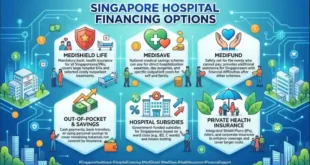
If you’re weighing Singapore surgery financing options, the realistic total for a private-hospital procedure in Singapore usually runs from about S$3,000 to S$80,000, depending on complexity, while subsidized public-hospital care is heavily means-tested and can cost a fraction of that. Most people combine two or three sources — MediSave, insurance, and a loan or installment plan — rather than relying on one.
Key Takeaways
- MediSave can cover part of many surgical bills, but withdrawal limits depend on the procedure table, not the full amount you’re charged.
- Integrated Shield Plans pay above MediSave, but only for covered conditions and only up to your plan’s limits and deductibles.
- MediShield Life covers everyone, including foreigners on certain passes, but at basic B2/C-class ward rates.
- Instalment plans from banks and hospitals typically run 6 to 60 months, with interest rates that vary widely.
- Public-hospital subsidies are the single biggest cost lever for citizens and PRs — always check eligibility before borrowing.
- Never sign a loan before checking what MediSave and insurance will actually pay first.
What Surgery Costs in Singapore
Costs split sharply between public and private care, and by ward class. The figures below are typical ranges, not quotes.
| Setting | Typical range (SGD) | Notes |
|---|---|---|
| Public hospital, subsidized ward | S$500 – S$8,000 | Means-tested; citizen/PR subsidies apply |
| Public hospital, private ward | S$3,000 – S$30,000 | Little or no subsidy |
| Private hospital, day surgery | S$3,000 – S$15,000 | E.g. cataract, minor scope procedures |
| Private hospital, major surgery | S$15,000 – S$80,000+ | E.g. cardiac, orthopedic, cancer surgery |
These are broad ranges. Your actual bill depends on surgeon fees, anesthesia, implants, length of stay, and whether complications arise.
MediSave: Your First Stop
MediSave is a mandatory medical savings account under the Central Provident Fund (CPF). You can withdraw from it to pay for approved surgical procedures, but there are hard limits.
How Withdrawal Limits Work
MediSave withdrawal limits are set by a procedure table that classifies operations into tiers. Each tier has a fixed maximum you can withdraw — regardless of what the hospital actually charges. If your bill exceeds the limit, you pay the difference in cash or via insurance.
What MediSave Covers
- Hospital charges — daily ward fees, ICU, and surgical fees within limits.
- Approved day surgery — many procedures done without an overnight stay.
- Selected outpatient treatments — including some cancer therapies and dialysis.
- Pre- and post-surgery scans related to the procedure, within limits.
What MediSave Does Not Cover
- Aesthetic or purely cosmetic procedures.
- Fees above the procedure-table limit.
- Non-approved treatments and experimental procedures.
- Most consultation and follow-up fees outside the surgical episode.
Pro Tip: Log into your CPF account to see your exact MediSave balance and check the current withdrawal limit for your specific procedure before you commit to any payment plan.
MediShield Life and Integrated Shield Plans
MediShield Life is the national basic health insurance scheme. It covers all Singapore citizens and PRs for life, regardless of pre-existing conditions, and covers foreigners on certain long-term passes. It pays for large hospital bills at subsidized ward rates, with deductibles and co-insurance you pay first.
Integrated Shield Plans (IPs) are private insurers’ upgrades that sit on top of MediShield Life. They let you choose higher ward classes and private hospitals. Key points:
| Plan type | Covers | Watch for |
|---|---|---|
| MediShield Life | B2/C-class public wards | Deductible + 10% co-insurance |
| IP (public hospital A/B1) | Higher-class public wards | Annual limits, exclusions |
| IP (private hospital) | Private hospitals | Higher premiums, pre-auth rules |
The Deductible and Co-Insurance Problem
Even with an IP, you pay a deductible (a fixed amount before insurance kicks in) and co-insurance (a percentage of the remaining bill). For private-hospital plans, this can leave you with a four-figure cash bill even on a covered surgery. Many people buy a rider to reduce this — but riders now require a minimum co-payment by regulation.
Warning: Insurers require pre-authorization for many procedures. If you go for surgery without getting approval first, your claim may be reduced or rejected. Always confirm with your insurer before admission.
Government Subsidies and Schemes
For citizens and PRs, subsidies are often the largest single saving — bigger than any loan.
Public Hospital Subsidies
Subsidy levels depend on your means test (income and property ownership) and ward class. Lower-income patients in C or B2 wards receive the highest subsidies. Subsidies apply to ward charges, some procedures, and selected drugs.
Medifund
Medifund is a government endowment that helps needy Singaporeans who can’t afford their medical bills even after subsidies, MediSave, and insurance. You apply through the hospital’s medical social worker. It’s a last resort and requires assessment.
Other Schemes
- ElderShield / CareShield Life — for long-term severe disability, not acute surgery.
- Community Health Assist Scheme (CHAS) — for outpatient care at participating clinics, not hospital surgery.
- Pioneer and Merdeka Generation packages — extra subsidies for older cohorts.
Instalment Plans and Medical Loans
When MediSave and insurance leave a gap, instalment plans and medical loans fill it.
Hospital Instalment Plans
Most public and private hospitals offer interest-free or low-interest instalment plans for outstanding bills, often over 6 to 24 months. These are usually the cheapest borrowing option because they’re tied to your existing bill.
Bank Medical Loans
Banks and licensed moneylenders offer personal loans and dedicated medical loans. Terms vary widely.
| Lender type | Typical tenure | Typical rate | Notes |
|---|---|---|---|
| Hospital plan | 6–24 months | 0%–low | Tied to your bill |
| Bank personal loan | 12–60 months | ~3%–8% p.a. | Requires income proof |
| Licensed moneylender | 1–12 months | Higher | Regulated, but costly |
| Credit card instalment | 6–24 months | ~0%–high | Convenient, watch fees |
Pro Tip: Compare the effective interest rate (EIR), not the advertised flat rate. A “flat 3%” loan can have an EIR closer to 6% because you repay principal throughout the term.
Warning: Licensed moneylenders in Singapore are regulated by the Ministry of Law’s Registry of Moneylenders. Borrow only from licensed entities, and never hand over your NRIC or Singpass details to unlicensed lenders.
Using Credit Cards and BNPL
Credit card instalment plans (often marketed as 0% instalment plans) let you split a bill over 6 to 24 months. They’re convenient but carry caveats:
- The 0% applies only if you pay every instalment on time.
- Late payment triggers high interest on the full outstanding.
- Some hospitals cap how much you can put on a card.
Buy Now, Pay Later (BNPL) services are generally not suitable for large surgical bills — their limits are low and late fees add up fast.
Employer and Charity Assistance
Don’t overlook these before borrowing.
- Employer medical benefits — many cover hospitalization and surgery, sometimes for dependents.
- Union and cooperative schemes — some offer medical grants or interest-free loans.
- Charitable organizations — bodies like the National Kidney Foundation, Singapore Cancer Society, and hospital-linked funds provide targeted help.
- Community Development Councils (CDCs) — offer local assistance schemes.
How to Sequence Your Financing
Order matters. Here is the sequence that usually saves the most money.
| Step | Action | Why |
|---|---|---|
| 1 | Get an itemized cost estimate | Know the real number |
| 2 | Check public-hospital subsidy eligibility | Biggest potential saving |
| 3 | Confirm MediSave withdrawal limit | Free money you already own |
| 4 | File insurance pre-authorization | Avoid reduced claims |
| 5 | Ask about hospital instalments | Cheapest borrowing |
| 6 | Apply for Medifund / charity if needed | Grants, not debt |
| 7 | Use a bank loan only for the gap | Last resort |
Pro Tip: Ask the hospital’s medical social worker for help. They know every scheme, grant, and instalment option available and can often reduce your bill before you borrow a cent.
Common Mistakes to Avoid
- Borrowing before checking MediSave. You may be able to withdraw more than you think.
- Skipping pre-authorization. Insurers can reduce or deny claims.
- Ignoring the deductible. Even covered surgery leaves a cash bill.
- Choosing a ward class you can’t afford. Private wards remove most subsidies.
- Taking the first loan offered. Rates vary enormously.
- Forgetting follow-up costs. Scans, medication, and physiotherapy add up.
Frequently Asked Questions
Can foreigners use MediSave in Singapore?
No. MediSave is only for Singapore citizens and PRs. Foreigners must rely on their own insurance, employer benefits, or cash. MediShield Life covers some foreigners on certain long-term passes, but coverage is limited to subsidized ward rates.
How much can I withdraw from MediSave for surgery?
It depends on the procedure table, which sets a fixed limit per operation. You can’t withdraw more than the limit, even if your bill is higher. Check your specific procedure’s limit on the CPF website before admission.
Does MediShield Life cover private hospital surgery?
No. MediShield Life pays at subsidized public-hospital ward rates. To use private hospitals, you need an Integrated Shield Plan, which costs more in premiums and still leaves deductibles and co-insurance.
Are hospital instalment plans interest-free?
Many public-hospital plans are interest-free or low-interest for short tenures. Private hospitals and longer tenures may charge interest. Always confirm the effective interest rate and any admin fees in writing.
Can I get a loan with bad credit for surgery?
Some licensed moneylenders lend to borrowers with weaker credit, but rates are much higher. Before that, exhaust MediSave, Medifund, hospital instalments, and charity schemes, which don’t depend on your credit score.
Is cosmetic surgery covered by MediSave or insurance?
Generally no. MediSave and MediShield Life exclude purely cosmetic procedures. Some reconstructive surgery after illness or injury may qualify if it’s medically necessary — confirm with CPF and your insurer.
Closing
Start by getting an itemized estimate from your hospital, then work through subsidies, MediSave, and insurance before considering any loan. The hospital’s medical social worker is your best free resource — book an appointment early, because the cheapest financing is the part of the bill you never have to borrow for.